

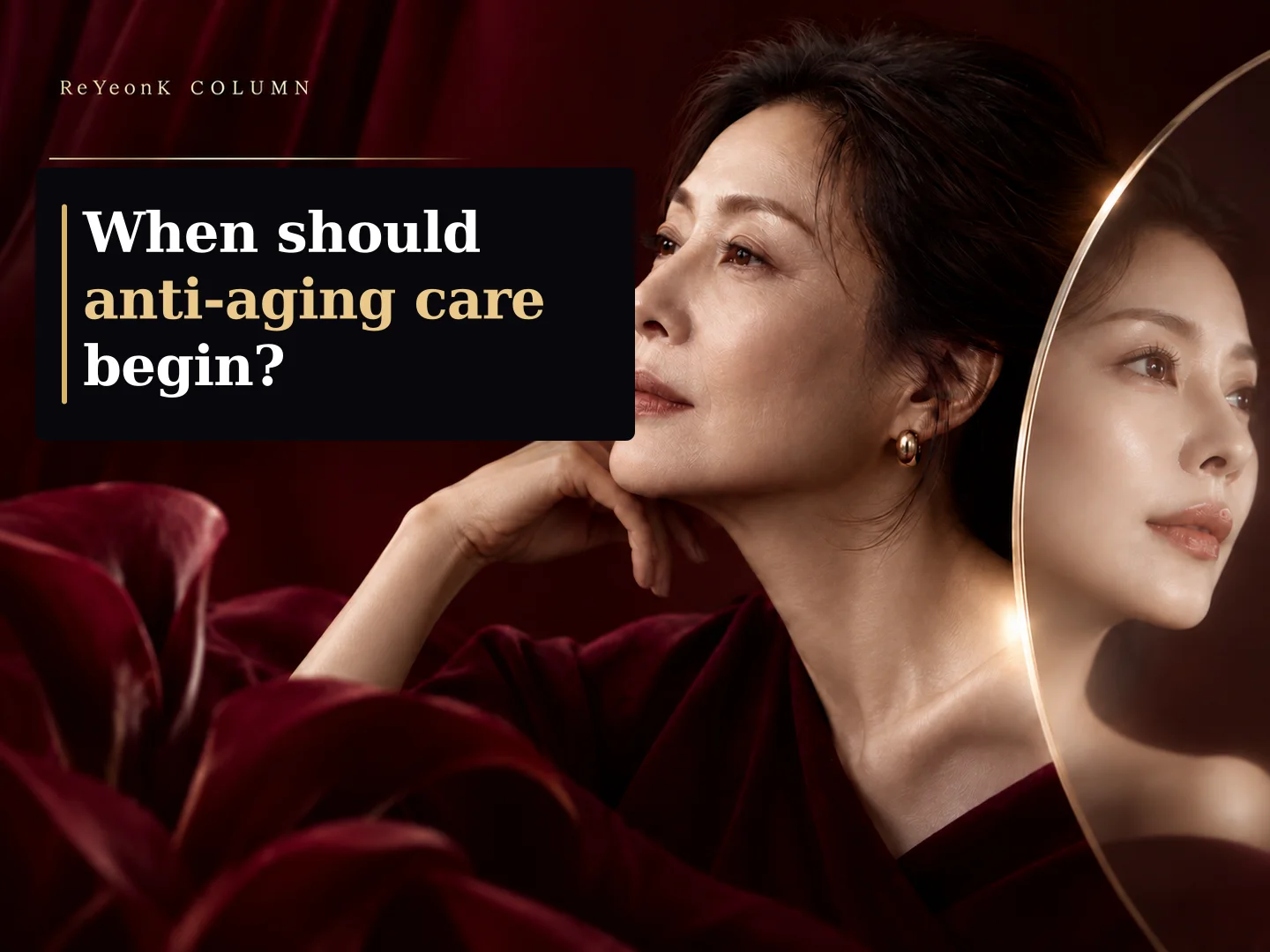
When Should Anti-Aging Care Begin?
Rethinking preventive skin care in the age of health intelligence
The core of preventive care is not starting treatments early. It is understanding how your skin is changing, intervening only when needed and only as much as needed, and reducing unnecessary treatment.
People who manage health with information, not intuition
These days people record how long they slept, how much they moved, and what they ate. Checking one's health with numbers and records rather than vague impressions has become everyday behavior. The same shift is happening in aesthetic medicine. Patients no longer stop at "just make me look better." They want to know why their skin is dry, which layer has lost firmness, and which care is needed now versus what can wait.
This attitude can be called health intelligence. Knowing a lot about health is not enough on its own. What matters is the ability to read your own condition, tell meaningful information from noise, and apply it to real life and treatment choices.
Longer lives have moved prevention earlier
One of the cases I find most regrettable in practice is women in their late forties who arrive after sagging has already progressed considerably. The late twenties is a beautiful age, and at that time many things can be corrected relatively easily. Yet they spend their younger years unaware of that possibility, come in late, and say, "I thought this couldn't be done for me." Every time I hear that, I wish they had known their own condition just a little earlier.
That said, "prevention" does not mean repeating aggressive treatments from a young age. For someone whose skin barrier is unstable, recovery may come first. Someone whose problem is expression habits needs a different approach from someone whose fat distribution or skin elasticity has changed. Preventive care that does not distinguish the current condition can simply add cost and burden.
Care matched to condition, not to age
Even within the same thirties, concerns differ. One person struggles with recurring inflammation and pigmentation; another first notices fine lines around the eyes or a changing jawline. So rather than deciding treatments by age alone, we need to look together at the skin's hydration and barrier, pigment and vessels, dermal density, fat distribution, and facial movement.
What ReYeonK checks first in consultation is not the name of a device either. We begin by asking which change bothers you most right now, what impression you want to keep, and how much recovery time your daily life allows. Then we choose the one priority that matters most in your current condition, and connect the next step only when it is needed.
Good preventive care keeps records
In preventive care, confirming the direction of change matters more than the result of a single treatment. The initial condition and the reason for treatment should be recorded, and after a set time the skin should be evaluated again by the same standard. Only then can we judge whether the effect is sufficient, whether maintenance is needed, or whether the next treatment can be postponed.
In this process, photos and skin records are not material for recommending more treatments. They should be the basis for confirming whether the previous choice was appropriate and for removing treatments that are not necessary. Patients, too, need to understand their own course of change so that the next decision comes from judgment rather than anxiety.
Not missing the right moment, and cutting unnecessary treatments
There is no single age that is the right answer for everyone to begin anti-aging care. Check in order: is there a change that bothers you now, can that change be managed with lifestyle alone, and if medical intervention is needed, how much is appropriate.
The preventive care I have in mind is not "treat unconditionally from a young age." It is knowing in advance what you can do now and what you do not need to do yet, so that you do not pass the best moment unaware and regret it later. Not missing the right moment while reducing unnecessary treatments is the purpose of preventive care.
Questions to think about before your consultation
Which part do you feel has changed first?
Rather than a younger face, what impression do you want to keep for a long time?
Which suits you better: one big change, or gradual changes with less burden?
Whether treatment is needed, and how it progresses, varies from person to person. What to do now and what to postpone is decided in consultation after examining the skin directly.
More from the Doctor's Column