Eyes That Look Half-Closed: How a Layer-by-Layer Approach Through EyeThera Can Help

Some people feel their eyes are fully open, yet those around them say they look half-closed, sleepy or tired. This can be seen as a structural issue of the eye area, because the impression given by the eyes is not determined by eyelid sagging alone. Reduced skin elasticity, a change in eyebrow position, volume loss in the upper eyelid, and fine lines or changes in skin texture can act together to create an eye area that looks heavy and tired.
The eye area is a part of the face where the skin is thin and the anatomical structure is complex. Rather than treating eye-area ageing as a single problem to be solved with a single device, it is therefore necessary to examine the layer in which the change has appeared. One concept used in aesthetic dermatology in recent years is “multi-layering.” Because ageing shows itself differently in the deep layer, the dermis and the surface layer, energy and procedures suited to each layer are applied. The eye area is a representative site where this approach is needed.
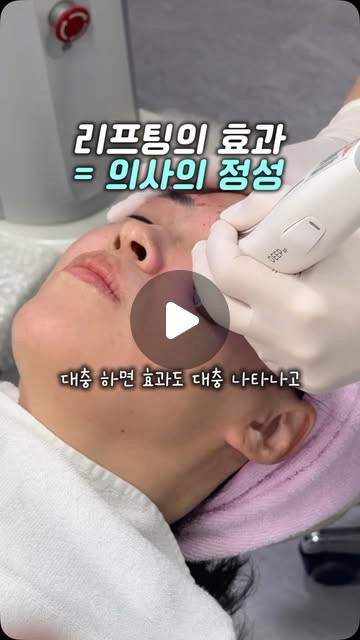
Dr. Lee Doochan, director of ReYeonK Clinic in Apgujeong, said, “In the deep layer, Eye Ulthera PRIME ultrasound can be used first. It delivers ultrasound energy into the deep layer around the eyes and eyelids, with the aim of improving the structural side of a drooping, heavy-looking eye. Next is the dermis. Virtue Eye delivers RF energy directly into the dermis through fine needles. Because the eye area is thinner and more sensitive than ordinary facial skin, it is important to control the needle depth and energy intensity precisely. Finally, Eye Tox can be applied to the surface layer. It is injected shallowly, close to the skin surface, to improve the fine lines caused by expression and the skin texture around the outer corners of the eyes.”
He continued, “EyeThera is built on this composite treatment concept of approaching the deep layer, the dermis and the surface layer in different ways. It combines 200 shots of Eye Ulthera with Virtue Eye and Eye Tox, and its significance lies in considering the different layers of the eye area together.”
Of course, the eye area is a site where pain and the burden of the procedure must be taken into account. In eye-area-specific procedures, it is therefore important to adjust intensity and depth to the thickness and anatomical characteristics of the skin, rather than applying energy in the same way as on other parts of the face.
However, ultrasound lifting is not the same answer for every case of eye-area sagging. The treatment strategy can differ depending on whether the drooping appearance is caused by reduced skin elasticity or by volume loss in the upper eyelid. For example, if the main cause is a sunken look from reduced upper-eyelid volume, ultrasound lifting alone may not achieve the desired result. In such cases, an RF-based procedure such as Thermage may be considered, or, where necessary, a small amount of upper-eyelid filler can be used to supplement the missing volume.
Dr. Lee said, “What matters in eye-area lifting is not blindly increasing the number of procedures or shots. What matters more is in which cases, and at what intensity and depth, devices that work at different depths — such as Eye Ulthera, Virtue Eye and Eye Tox — are applied. Even for the same eye-area sagging, the treatment needed can differ depending on an individual’s skin thickness and eye-area structure, the position of the eyebrows and eyelids, changes in fat and soft tissue, and the degree of skin elasticity and wrinkling.”
He continued, “If the eye area looks heavier and more tired than before, rather than simply concluding that ‘the eyes have drooped,’ the first step is to look at which layer of the skin and tissue the change began in. That can be the starting point of eye-area treatment.”
Treatments Mentioned
Related Videos
See the actual procedure and results on video