

With Ultherapy, Where You Place It Matters More Than the Shot Count
How to properly understand ultrasound lifting you can see
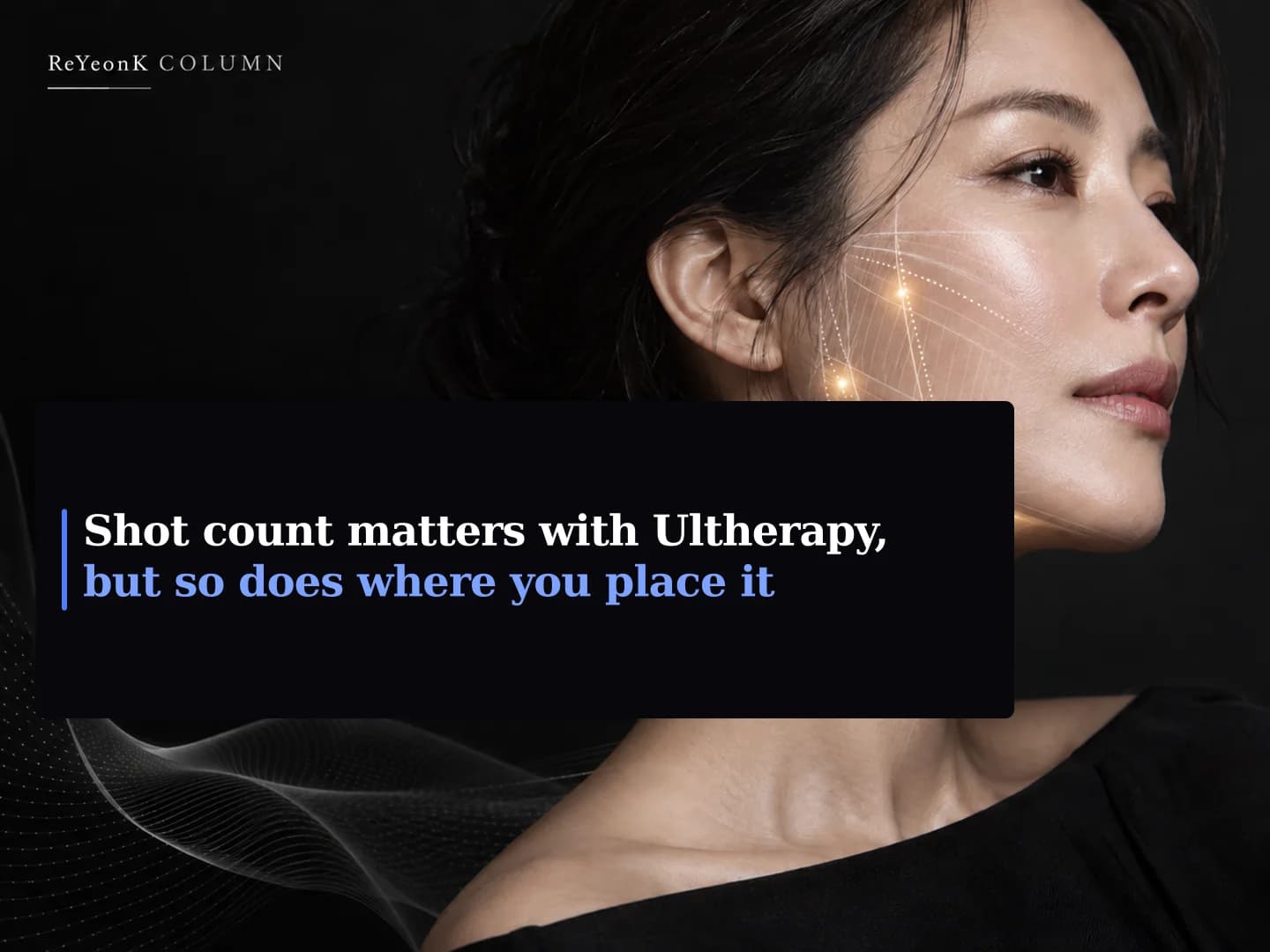
The core of Ultherapy is not a large number of shots. It is confirming the structures beneath the skin with ultrasound imaging and placing energy at the target depth.
What it means to see while treating
Ultherapy is a device that delivers micro-focused ultrasound (HIFU) energy to a selected depth beneath the skin. An important feature is that the layers of skin and subcutaneous tissue can be confirmed through real-time ultrasound imaging during treatment. The principle is to form thermal coagulation points without incising the skin, inducing contraction and remodeling of loosened tissue.
Skin thickness, the fat layer, and the position of support structures differ from area to area on the face. Imaging helps distinguish the layer the energy should reach from the structures to avoid, but it must be paired with the physician's judgment in reading the screen and designing the treatment lines.
The shot count is the result of a prescription, not the goal
Many people think Ultherapy inevitably hollows the cheeks. But by distinguishing the areas where hollowing must be avoided from the volume that should be kept, and designing while viewing the ultrasound image and the anatomy, that risk can be reduced. What matters is not filling a shot count but deciding where to place shots and where not to.
When I hear from people who had Ultherapy at other clinics, some say "I only had the jawline done" or "only one cheek." I do not view lifting in such a localized way. Facial sagging does not appear in one area in isolation; the whole face below the forehead is connected, so I look at the overall flow and distribute depth and shots by area.
What Ultherapy does well, and what it does not
Treatments that reduce fat by suctioning a specific area, like InMode, take a different approach from Ultherapy and Thermage. Describing Ultherapy as a treatment that only reduces fat in a specific area can blur its purpose. Ultherapy is also not a device that fills lost volume or directly treats pigment and skin texture, so if several concerns are mixed, the order needs to be separated.
There may be an immediate feeling of tightness, but tissue remodeling takes time. Rather than judging the result too early, it is better to evaluate at a set time with photos and how it feels.
Checks for safe treatment
Pain during treatment, and redness, swelling, tenderness, or temporary changes in sensation afterward, can occur. Rarely, nerve-related symptoms have also been reported, so anatomy-based design and a system for guidance in case of adverse reactions are important.
When I design Ultherapy, I look at the connection of the whole face below the forehead. That does not mean treating every area equally strongly. Keeping the volume that should be kept, and placing energy only in the layers and directions where it is needed, is the standard for natural lifting.
Questions to think about before your consultation
In which layer and direction did my sagging begin?
What is confirmed on the ultrasound image, and how are the shots distributed?
Which areas need their volume kept or should be avoided?
Treatment information
Ultherapy's mechanism, timing of results, and duration are covered on the page below and in the lifting series columns. Prices can be checked in the current event listing.
Medical references
Ultherapy official indications and safety information (ultherapy.com)
Merz Aesthetics, Ultherapy PRIME real-time visualization information (merz.com)
This column is for general information. Individual indications, results, recovery, and risks depend on your condition and treatment settings, and should be decided after a medical consultation.
Treatments in this article
More from the Doctor's Column